In this guide
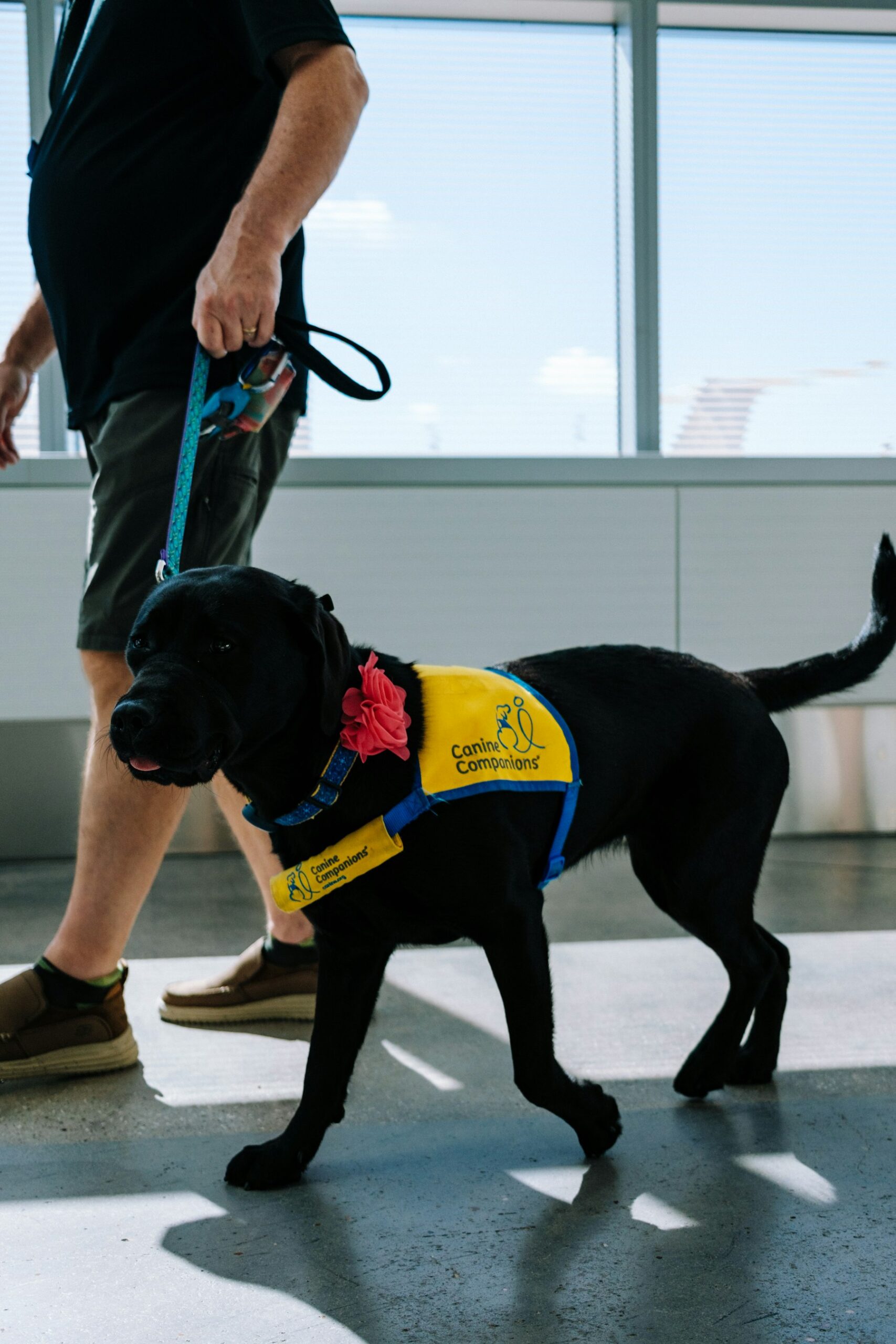
- A service animal is a dog individually trained to perform tasks for a person with a disability. It can go almost anywhere the public can go.
- An emotional support animal helps through companionship. It needs no special training, and its main legal protection is in housing.
- Both are covered by the Fair Housing Act, so both can live with you in most “no pets” housing.
- Only trained service dogs get protections on U.S. flights and in stores and restaurants.
“Service animal” and “emotional support animal” get used interchangeably all the time — on social media, in rental listings, even by some landlords. Legally, they’re very different. Knowing which one you have (or need) tells you where your animal can go and what paperwork makes sense.
Service animal vs. ESA at a glance
| Service animal | Emotional support animal | |
|---|---|---|
| What it does | Performs specific trained tasks related to a disability | Provides comfort and support through its presence |
| Training required | Yes — individually trained for tasks | No special training |
| Type of animal | Dogs (with a separate rule for miniature horses) | Any common household animal |
| Stores, restaurants, public places | Allowed under the ADA | Not covered |
| Housing | Protected | Protected |
| Flights | Accepted by U.S. airlines (forms may apply) | Treated as pets by most airlines |
| Documentation | None required in public; may be requested for housing | A letter from a licensed clinician for housing |
What is a service animal?
Under the Americans with Disabilities Act (ADA), a service animal is a dog that has been individually trained to do work or perform tasks for a person with a disability. The task has to be directly related to the disability. Examples include:
- Guiding a person who is blind or has low vision
- Alerting a person who is deaf to sounds
- Pulling a wheelchair or picking up dropped items
- Alerting to or responding during a seizure
- Detecting low blood sugar
- Interrupting a panic attack or a harmful behavior, or providing trained deep-pressure therapy
Those last examples describe a psychiatric service dog. It supports a mental health condition — but unlike an ESA, it is trained to perform specific tasks, which is what makes it a service animal.
What is an emotional support animal?
An emotional support animal helps a person with a mental or emotional health condition simply by being there. It might ease anxiety, help with loneliness during depression, or bring a sense of calm and routine. ESAs don’t need task training, and they don’t have to be dogs — cats, rabbits, birds and other common household animals can all be ESAs.

The main legal protection for ESAs comes from the Fair Housing Act. With a letter from a licensed clinician, you can ask your landlord to allow your ESA as a reasonable accommodation. Our guide on how to get an ESA letter online walks through the process.
Where each one can go
Public places
Service dogs can go with their handlers into stores, restaurants, hotels, hospitals and most other places open to the public. Emotional support animals don’t have this right under the ADA, though some businesses may choose to allow them.
When it isn’t obvious what a service dog does, staff can ask only two questions: (1) Is the dog a service animal required because of a disability? and (2) What work or task has the dog been trained to perform? They can’t ask about your disability, ask for documentation, or ask the dog to demonstrate its task.
Housing
Both service animals and emotional support animals can be protected under the Fair Housing Act. If your disability or your need for the animal isn’t obvious, a landlord may ask for reliable documentation — which is where a letter from a licensed doctor helps, for either type of animal. If you run into pushback, read when a landlord can deny an emotional support animal.
Air travel
Since January 2021, U.S. Department of Transportation rules require airlines to accept trained service dogs, but not emotional support animals. Airlines may ask service dog handlers to fill out a DOT form about the dog’s health, training and behavior. Most airlines now treat ESAs as regular pets, with their usual pet fees and size limits.
Work
At work, requests to bring an animal are handled as accommodation requests under employment law, case by case. Employers may consider ESAs as well as service animals.
Myths about certification, registries and vests
- There is no official national registry for service animals or emotional support animals.
- Vests, ID cards and certificates are optional. They can help signal to others that your animal is working, but they don’t create legal rights.
- Misrepresenting a pet as a service animal is illegal in many states and can lead to fines.
Which one is right for you?
If your animal helps you mostly by being with you at home — easing anxiety, helping you sleep, giving structure to your day — an emotional support animal is likely the right fit, and an ESA letter is what you’ll need for housing.
If your dog is trained to perform specific tasks related to your disability — guiding, alerting, retrieving, interrupting symptoms — it may be a service animal. A doctor’s letter documenting your disability-related need can still be useful for housing, especially when your disability isn’t visible.
The bottom line
The difference comes down to training and tasks. Service dogs are trained to do specific work and have broad public access. Emotional support animals help through companionship and are protected mainly in housing. Whichever you have, the right documentation from a licensed clinician makes housing far simpler — and with Dogtor’s Note, your landlord can verify it online in seconds.
Frequently asked questions
Can an emotional support animal go into stores and restaurants?
Not as a legal right. The ADA covers trained service dogs, not emotional support animals, so businesses don’t have to allow ESAs. Some businesses choose to allow pets or ESAs anyway.
Is a psychiatric service dog the same as an emotional support animal?
No. A psychiatric service dog is trained to perform specific tasks for a mental health condition, like interrupting a panic attack or providing deep-pressure therapy. That training is what makes it a service animal. An ESA helps through its presence and doesn’t need task training.
Do service dogs need to be certified or registered?
No. Under the ADA there is no official certification or registry for service dogs. Businesses can only ask whether the dog is required because of a disability and what task it has been trained to perform.
Can I train my own service dog?
Yes. The ADA doesn’t require professional training. The dog must be individually trained to perform tasks related to your disability and be under control in public.
Can a cat be a service animal?
Under the ADA, only dogs (and, in some cases, miniature horses) can be service animals. A cat can be an emotional support animal, which is protected in housing with a letter from a licensed clinician.
This guide is general information, not legal or medical advice. Laws and policies change and can vary by state, city and building. For advice about your situation, talk with a licensed professional.